Most of Las Vegas rebuilds every decade or so. Downtown didn’t get that memo. Walk a few blocks of Fremont Street, and you’re standing where the city actually started, neon signs and all. Here, Old Vegas isn’t a theme: it’s the address.
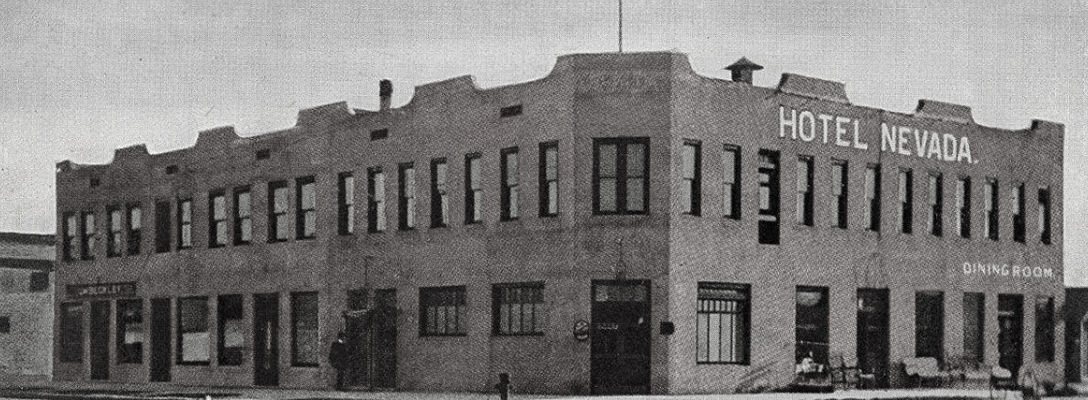
Golden Gate opened its doors on January 13, 1906, as the Hotel Nevada, back when Las Vegas was a railroad stop with dirt streets and a handful of buildings. It’s the city’s oldest hotel-casino, still standing at 1 Fremont Street, where Las Vegas itself grew up. The property has worn a few names since then (Sal Sagev for a stretch in the 1930s, Golden Gate since 1955), but it’s never left that corner, and it just marked its 120th anniversary this year.
Ten of the original 1906 rooms are still in use today, updated but true to their bones, so guests can actually sleep in a piece of historic Las Vegas rather than just reading about it in a lobby placard. Golden Gate also claims a few genuine Las Vegas firsts: the city’s first telephone, installed in 1907, and the first outdoor electric sign in town. If old downtown Las Vegas has an origin point, this is it.
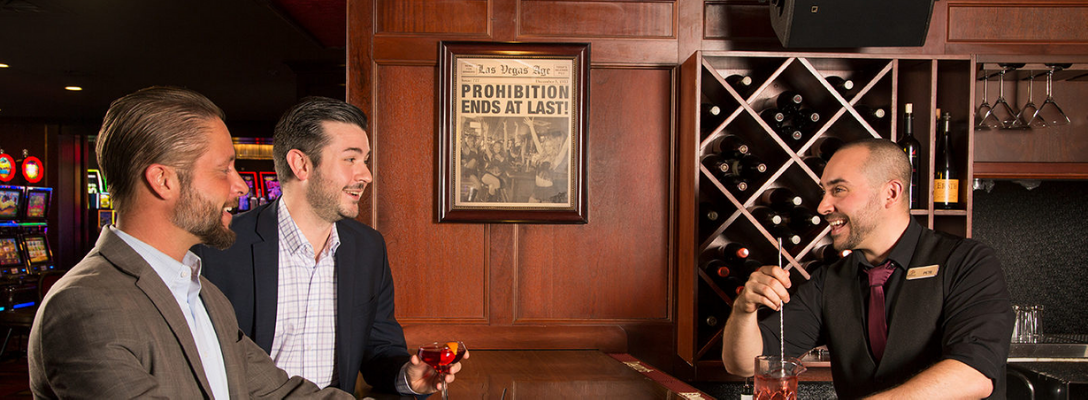
Golden Gate’s original casino bar has worn a lot of hats since 1906: a Wild West watering hole, a Roaring ’20s hangout, and later a regular stop for Frank Sinatra, Sammy Davis Jr., and Dean Martin during the Rat Pack years. In 2013, it was renamed Bar Prohibition!, leaning fully into its speakeasy roots with dark wood, vintage details, and a cocktail menu built around classics.
It’s still the most direct route to classic Vegas in one drink. Every night from 6 to 7 p.m., the bar runs an open bar happy hour, no small thing for a bar with this much history behind the counter.
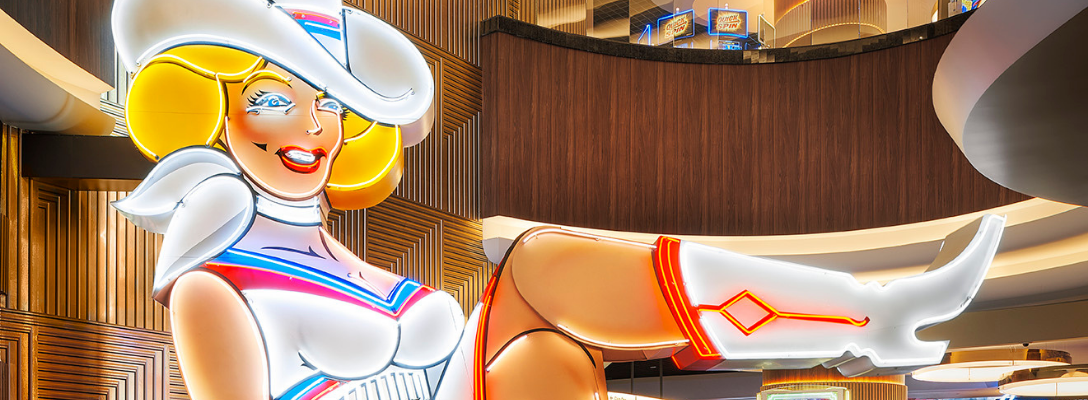
The neon sign is as much a symbol of old Vegas as a deck of cards, and Fremont Street is where most of that legacy is still visible in person. Vegas Vic, the giant neon cowboy, has watched over Fremont Street since the 1950s. His counterpart, Vegas Vickie, the kicking neon cowgirl who once hung outside the old Glitter Gulch casino, now lives just down the block inside Circa’s Vegas Vickie’s Cocktail Lounge after a careful restoration.
For a deeper dive, the Neon Museum sits a short drive away and houses dozens of retired signs from casinos that shaped the city, some restored to their original working condition. Between the Neon Museum’s boneyard and the signs still lit up and working on Fremont Street itself, it’s one of the only places left where you can trace the visual history of vintage Las Vegas block by block instead of through a photo archive.
A few blocks east, El Cortez has operated continuously since 1941 and holds a spot on the National Register of Historic Places, one of the few casinos in the country with that distinction. Between Golden Gate’s 1906 building and El Cortez’s 1941 one, Downtown holds a stretch of Las Vegas history the Strip simply can’t offer, since almost nothing built there before the 1990s is still standing.
Downtown Las Vegas keeps its old-school spirit intact in a way the rest of the city gave up on decades ago, and Golden Gate has been at the middle of that story since before Las Vegas was really a city at all. A drink at Bar Prohibition!, a walk past Vegas Vic’s neon glow, and a night’s stay in one of the Original 10 rooms cover more actual history than most Strip resorts have collectively seen in their lifetime.
Book a stay at Golden Gate, and you won’t just be close to old Vegas, you’ll be standing in the room where it started.